Loading...
Gadget by The Blog Doctor.

Sunday, May 18, 2008

Using technology in the classroom

Why is it important to use technology in the EFL classroom?

First, technology has achieved so much in every aspect of our lives so why not try to take advantage of this remarkable tool in the field of education. Actually, it has already done. Therefore, it is not something new. Many linguists and grammarians use data from linguistic corpora today to supplement their researches or to create new books of grammar (Scott Thornberry: Natural Grammar) or dictionaries (Macmillan /Oxford) , etc.. Many teachers around the world have also used the Internet at various levels. Almost every teacher has typed a text using a word processing program, used an OHP, a laptop, a TV set, a cassette recorder, navigated the Internet to find resources and materials to enrich his learners' experience, etc...

There is a variety of interesting ways a teacher can benefit from high technology:

-Teachers can download millions of ready-to-use materials, ready-to-print worksheets/activities, thousands and thousands of PowerPoint slides, short movies, graphics, animations, sounds for immediate use in the language classroom.

-We can ask our colleagues for solutions to the problems we face on a daily basis and get feedback on our work as the Internet now serves as a big staff room.

- We can now use a variety of Multimedia CDs that have interactive and diverse content that appeals to a wider range of students, whatever their learning styles are: that is kinesthetic, tactile, visual..

-Besides some types of content is ideal for particular activities: audio material is perfect for speaking and listening. Video/ animation is perfect to demonstrate processes.etc..

-Teachers can get rid of the "dog-ate-my homework syllabus" as students can complete tasks at home and can send them 24/day.

-Technology fosters teamwork, as teachers need to work with other colleagues or experts to master how to utilize high tech.

On the other hand, students can also gain a lot from incorporating technology in the classroom. Some of the benefits include, to name a few, breakthrough from the monotony of the traditional classroom. Multimedia content is often attractive to students as it is interactive and multifaceted as it includes sounds, video, text, etc..

Students can take responsibility for their own learning as they make decisions when they browse various sites to find relevant information.

Students can have access to rich and timely content on the web everyday.

Besides, they can communicate with students from all over the world and can chat / write to them, which gives a real purpose for their interaction because they do actually use the language to communicate.

In addition to real communication, students can improve their computer skill, which prepares them for the real world of work as many jobs require computer skills and network use.

How have I personally used high tech in my classrooms?

Some of my favorite applications are Hot Potatoes, Camtasia and Flash although I am also proficient in Photoshop, InDesign, and Illustrator. The formers, however, have an immediate relation with teaching. Hot Potatoes is an educational software created by the Research and Development team at the University of Victoria Humanities Computing and Media Center. It consists of six authoring tools: JCloze, JQuiz, JMix, JMatch, JCross and the Masher. It is designed to help teachers develop online / computerized tests, quizzes, round up lessons and activities. No or very basic programming is needed. This content can be delivered via emails, CDs, published online, used in the classroom as part of a datashow presentation, etc...

This application is perfect for including different types of content like audio, video, graphics, etc... Besides, it gives learners immediate feedback on their answers and their scores in real-time.

The second is Camtasia. It is an application designed to develop online tutorials or lessons. It records whatever you do on the desktop. Therefore, you can use it to record a whole lesson. This can be later delivered on a CD for students who were unable to attend the course or for those who want to view the lessons again. The third one is Flash. It needs some programming knowledge but it can be great in delivering rich content either on CDs or on a web site.

How often do I use High-tech in my classrooms?

I use the electronic classroom once or twice every 15 days and I make sure I vary the content. I use "hot potatoes" for round up sessions. I use the Internet to get the students to find materials relevant to lessons. I prepare PowerPoint slides from time to time and encourage my students to do so. I use the Internet to get authentic material like film reviews, charts, statistics, ready-to-print materials to further consolidate a grammatical point or a topic. I try to get my students to publish a wall poster or a classroom magazine. I used Photoshop and InDesign to design a magazine for teachers of English. I occasionally use a datashow and a laptop to present my workshops: I have already presented three workshops this year: Hot potatoes, using data shows, using network support and soon Flash.

Thursday, May 15, 2008

Motivating young learners to do project work:

One of every teacher's aspirations is to get his students involved and motivated. What is better than to see your students actively learning and having fun while they are doing it? But, how can you do it? You think you tried every possible stratagem and that just falls short. But, wait! Maybe you haven't tried these tried-and-proved tips yet:

1-Be motivated yourself and show your enthusiasm. It is a contagious disease and once your have it, your students will catch it.

2-Make sure your classroom is a cheerful environment where students feel loved and cared for.

3-Try concrete activities and get your students involved in decorating the classroom, growing and watering plants (carrots, herbs, etc...). Help them to put stickers/ labels on each plant. Kids will feel they are part of the school and will look forward for your lessons.

4-Have your students participate in a "real" project like gathering fake money to buy an imaginary house, an imaginary doll, bike, etc..

5-Some teachers use “Fun Money": They gave them to their students as a reward for being responsible, calm, doing homework, helping their friends, etc... By the end of the week, these can be exchanged for real treats.

6-Invite guests from the local charity or volunteering communities to come to your classes.

7- Use a map to walk your students to the local museum or a national park.

8- Use a camera to videotape your classroom. Use it later to give feedback and to make your students aware of their behavior. Show them which behavior is appropriate and which is not.

9-From time to time, you can invite the students' parents to attend a stage performance by your students. This not only involves parents but also gives a real sense of achievement for the kids.

Example of ideas that can be done as project work:

For these activities you will need a display board to display kids' work

Making a family tree: It can be created with the help of the kids' family: You can bring photos of your family and show them how you can create your own family tree.

Creating an alphabet book for animals or fruit, etc… with animals beginning with letter A on the A page, etc... Have your kids sit in groups. Give each group a letter or two and animals' pictures to match and glue.

Food party: Make a list of safe and simple food recipes: Kids can bring bread, cheese and tomatoes, etc... Cut the tomatoes or eggs for them as they may cut themselves. Write instructions on the board.

Role play:Prepare simple dialogues beforehand. Kids love to imitate others and to perform: Have them play the role of the teacher with simple dialogues like: “sit down”, “Stand up”, “Open your books, please”. Have their partners act what he is told to do (sits down) encourage them and let other kids do that to (applause, saying: well done! etc…)

Handicrafts: Encourage your students to

-create something for their mom, dad or a family member (help by providing examples: a flower, a ring, a small jewelry box, etc...)

-Write a card for their mom, father for their birthday, etc...

-Celebrate their friends' birthdays by creating small cards with (happy birthday to their friend, I love you, thank you, etc...)

Games: They can be very successful with young learners if you apply them suitably. For instance, hide objects to be collected and arranged together by your learners like flash cards with pictures and corresponding labels.The kids find the words and stick them next to the corresponding names.

Drawing: Students can draw their house plan with the help of the family: kitchen on the right, living room on the right.Or they may draw a map and find their way to the kindergarten

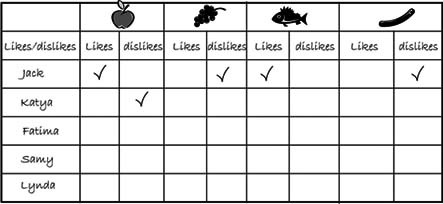
Likes and dislikes book: Prepare a sheet for each group with the names of the other kids in other group(s): Encourage them to find what their friends like or dislike.

likes and dislikes_sheet

Later, you can ask your students to prepare a book using all these sheets.You can also make them count how many love what. They can draw a kind of statistics table, etc..

Theory that works:

Often you will find yourself in a situation where your students are more excited than you want them to be. Or they may get bored when you ask them to do a particular activity.

That is a usual situation. In fact, you can even turn that to your advantage! Activities can be divided into two types: “stir” and “settle” activities: Stir activities: can make the learners involved but it can make them over-excited and restless. Settle activities: they can calm a class down but it also can be boring.

How to use these to your advantage? You can make a list of those activities that “stir” students and those that calm them down. Use them when you think they are more appropriate: copying and coloring are rather “settling” activities while competitions are rather “stirrers”. Besides, some language skills can calm your kids down (listening) while others may excite them (speaking).

References:

50 ways to motivate kids

project based learning

Teaching English in The Primary Classroom by Susan Halliwell

Saturday, May 10, 2008

A great site for improving one's speaking skills: sharedTalk!

Some friends advised me to have a look at this site.. It was a nice surprise to me! You can go there and improve your communication skills not only in English but also in many other languages. It makes you feel the world is really such a small village.. On my first day there, I talked to a sweet Russian lady, an intelligent, hard-working  Brazilian student and two lovely Chinese students..We talked about the Victory Day in Russia, the Carnival in Brazil and I learned how to say "hi" in Chinese: Ni hao!

It is a wonderful place for sharing. It is simply called:

sharedtalk 

N.B: Remember to be nice and open-minded! This will give you a better chance to learn and practise the language.

Enjoy it!!

Monday, May 5, 2008

Poetry in the classroom

Using Poetry in the classroom is not something you want to miss. There are various reasons to preach teaching poetry: First of all, believe it or not: kids and students love it. They love rhymes and the music inherent in poems. Besides, I think poetry lessons can make students love the language as they are encouraged to use it creatively. Moreover, it urges students to learn more vocabulary as they look for words that would rhyme with other words.
This can be also used to consolidate the recognition of the stress in words..
I used to avoid teaching poetry at first, to be honest, because I thought students will not be involved and they won't love it. Then, I read a few articles about teaching poetry and wanted to try it myself. The results were more than reassuring. My students are pre-intermediate learners so I avoided going into much detail: we talked only about rhymes. I asked some of my students to provide any words that they can think of in English. The others tried to find words that rhyme with them. Then we wrote down the words on small seperate cards. I asked my students to put them in groups: some words belong to the School group. Other words belong to the Food group,etc..Then I told my students that this is how poems are written basically. I asked them to write a simple poem about one of the groups using the rhyming words provided.. I did not talk about scansion or difficult stuff..I think this is what they need for the time being..The result was more than satisfying.. I also encouraged my students to be creative as to the presentation: I showed some examples i printed from the net.. Some wrote their poem on a piece of cloth..Others on a paper shaped as a green leaf,etc..
So, I am not going to miss any opportunity to use poems in my classes!
For great links on how to teach poetry:
http://www.netaxs.com/katz/teachers.htm
http://pdfs.voya.com/VO/YA2/VOYA200404PoetryContagious.pdf

NB: This entry was originally posted in http://www.teachingenglish.org.uk/
Here is the link : http://www.teachingenglish.org.uk/talk/polls/poetry-classroom#comment-423

Sunday, May 4, 2008

Portfolios: why should I have one?

Portfolios have been around for decades. Therefore, the idea is not a new one. What is new, however, is the new ways technology makes available for us to have well-organised, large-scale, easily accessible portfolios in a variety of affordable means.
However, let us start with what a portfolio is and why we even need one in the first place.
A teaching portfolio is
"is a collection of materials that document a professor's teaching goals,
strengths, and accomplishments.
It contains self-generated material (e.g., a
teaching philosophy statement; representative syllabi, instructional objectives,
handouts, assignments, and tests; descriptions of educational innovations and
evaluations of their effectiveness; textbooks and education-related papers
published; instructional software developed; teaching workshops and seminars
presented or attended).
· teaching products (e.g., graded assignments,
tests, and reports; scores on standardized tests; student publications or
presentations on course-related work).
· information generated by others
(e.g., summaries of student, alumni, and peer evaluations; honors and awards;
reference letters). Some items may be mandated, others may be included at the
professor's option."
(from www.utexas.edu/academic/cte/teachfolio.html )
For more details on what to include in a portfolio and for the steps to compile one, here is a short and snappy article: http://www.utexas.edu/academic/cte/teachfolio.html
Keeping a portfolio is beneficial for many reasons: First, it is the best way for a teacher to evaluate and trace his progress as a teacher. Besides, it can serve as a basis for promotions in your career or evidence of your achievements if you consider looking for a better opportunity in other places. A teacher can also use his portfolio as a reference or guide to come back to to solve some problems: If you have a problem motivating your students, you can go back and find materials, activities, ideas you used before. Your portfolio can also serve as a valuable guide for new teachers to follow.
Keeping a portfolio is quite easy. You can have drawers or folders to keep your files if you are "old school" or you can type, scan and store your files in your computer. Always remember to keep a back-up copy of your portfolio. You can trust a computer as much you can trust a wolf beside a lamb.
You can also download software specifically designed for creating resumes and portfolios: http://www.aurbach.com/Toot/index.html
NB: it might, however, not work properly if you are using Windows XP or later.
So do you keep a portfolio? Do you think it is important to have one? What do you keep in a portfolio?
I am keen on knowing about what you think!

References: http://www4.ncsu.edu/unity/lockers/users/f/felder/public/Columns/Portfolios.html
http://www.utexas.edu/academic/cte/teachfolio.html